
Some of the most intelligent children don’t look “advanced.” They don’t perform on cue or impress adults with quick answers. Instead, they look persistent — trying again and again long after others give up. They look distracted — because they are deeply focused on a problem no one else noticed. They look emotionally intense — frustrated when their ideas outpace their hands, upset by unfairness, or overwhelmed when something doesn’t work the way they imagined. These children are often misunderstood, not because they lack ability, but because their intelligence doesn’t show up as polished performance. It shows up as deep thinking, internal planning, constant testing, and a mind that refuses to stay on the surface.
“My Child Does This — Does That Mean They’re a Genius?”
Rethinking what intelligence actually looks like in early childhood
A child spends ten minutes trying to open a cabinet instead of asking for help.
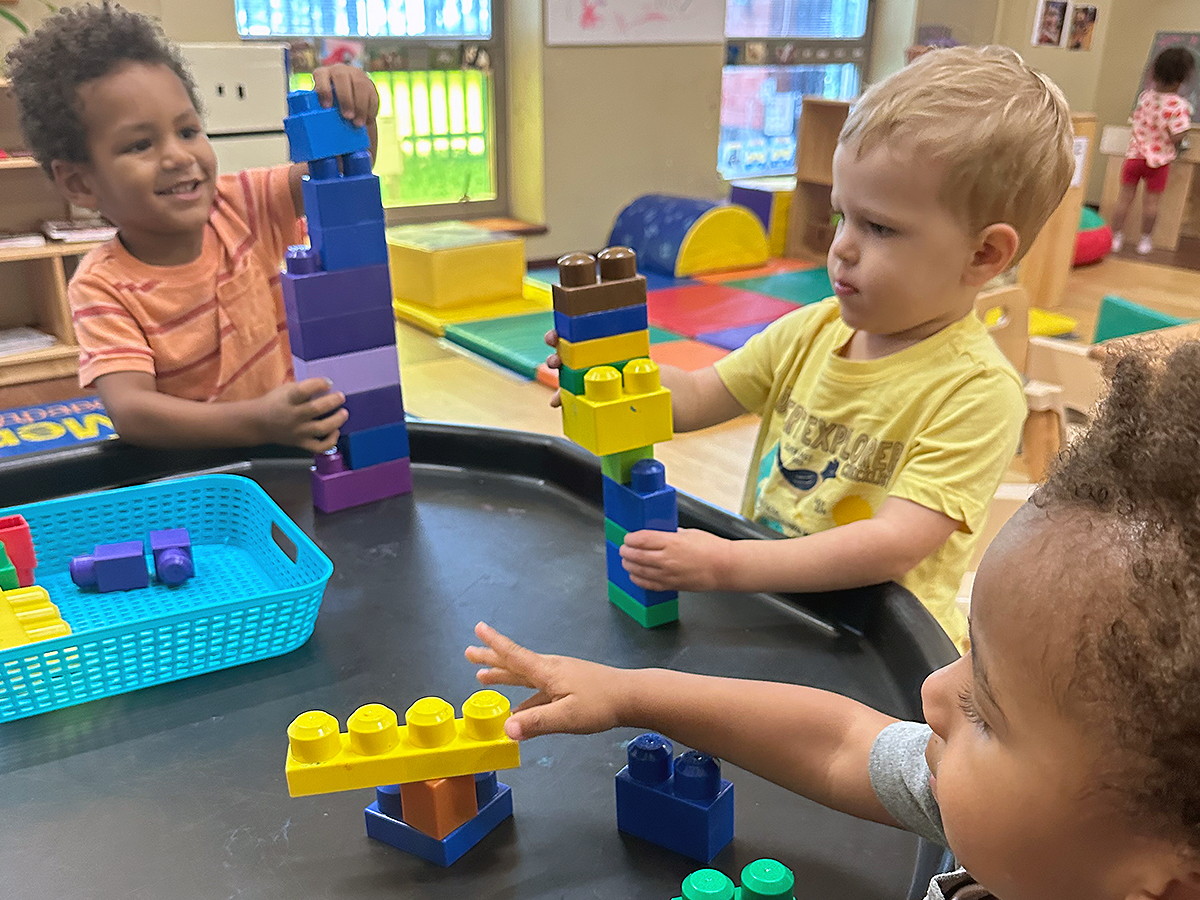
Another lines up blocks, knocks them down, rebuilds, adjusts, and tries again.
A preschooler ignores the adult-led activity and becomes deeply absorbed in creating an imaginary world with rules only they understand.
These moments are often brushed off as distraction, stubbornness, or not following directions.
In reality, they are some of the strongest early signs of high intelligence.
This is where many parents — understandably — get confused. We tend to label intelligence based on what looks impressive from the outside, rather than what is happening inside the brain.
So let’s slow this down and clarify three critical things:
- What intelligence actually is
- How it’s different from rote learning
- What parents should focus on in the early years to support future success
What intelligence actually is (and isn’t)
In early childhood, intelligence is not defined by how much information a child can repeat.
Intelligence is the brain’s ability to:
- Think flexibly
- Solve unfamiliar problems
- Adapt when something doesn’t work
- Regulate emotions under challenge
- Make connections across experiences
In short: intelligence is a process, not a performance.
Rote learning, on the other hand, relies on imitation and memory. A child can repeat facts accurately without understanding them, without adapting them, and without applying them to new situations.
That distinction matters — a lot.
Why this matters in today’s world
We no longer live in a world where success depends on who remembers the most information.
Information is everywhere.
What children will need as they grow is the ability to:
- Think critically
- Learn independently
- Solve problems that don’t have clear answers
- Manage frustration and stress
- Adapt to rapid change
When early childhood is overly focused on memorization and visible performance, children may appear “ahead” early — but lack the thinking systems required later.
This is why understanding intelligence early isn’t just helpful.
It’s protective.
So when are children learning about the world?
This is the question parents always ask next — and it’s an important one.
Children are constantly absorbing information about the world through experience, not through repetition alone.
They learn:
- Physics when towers fall
- Math when objects are sorted, compared, and balanced
- Language through conversation and storytelling
- Social rules through play and conflict
- Cause and effect through experimentation
The difference is how that information is acquired.
When knowledge is embedded in thinking, problem-solving, and real experience, it sticks — and it strengthens intelligence at the same time.
What high intelligence often looks like at different ages
Infants (0–12 months)
Highly intelligent infants often pause before acting. They observe, track patterns, remember where objects disappear, and adjust behavior after one failed attempt. They experiment — not randomly, but deliberately.
Toddlers (1–3 years)
You may see persistence, strategy changes, early planning (“I need the chair first”), and frustration tied to wanting independence. These children are often mislabeled as “strong-willed.”
Preschoolers (3–5 years)
Look for deep focus on self-chosen activities, planning play in advance, enforcing rules in pretend games, and creating complex imaginary worlds. These children often struggle in rigid, adult-directed environments.
Early Elementary (6–8 years)
High intelligence shows up as reflection, revising work independently, making unexpected connections, and questioning assumptions rather than memorizing answers.
How intelligence is cultivated (not accelerated)
The good news is this: intelligence in early childhood is highly malleable.
It grows when children are given the right kind of experiences.
Here’s what actually helps:
Executive function
Planning, flexibility, and self-control grow when children:
- Solve problems independently
- Manage multi-step tasks
- Play games with rules and waiting
- Are allowed to try, fail, and try again
Creativity
Adaptive thinking develops through:
- Open-ended materials
- Pretend play without scripts
- Art without examples
- Building without instructions
Problem-solving
Real cognitive growth happens when:
- Tasks are slightly challenging
- Adults pause instead of fixing
- Children are encouraged to test ideas
Language as thinking
Intelligence deepens when language is used to:
- Explain reasoning
- Predict outcomes
- Reflect on experiences
- Tell original stories
Emotional regulation
A thinking brain needs emotional safety.
Allowing frustration, naming emotions, and modeling calm problem-solving builds both emotional and cognitive strength.
The shift parents can make
Instead of asking:
“What does my child know?”
Try asking:
“What does my child do when something is new, hard, or doesn’t work?”
That question reveals far more about intelligence than any early performance ever could.
The real takeaway
Intelligence is not something children either have or don’t have.
It is something that grows when we give the brain the right kind of work.
In the early years, our role isn’t to load children with information.
It’s to protect time for thinking, struggling, imagining, and regulating emotions.